Enjoy!!!

Enjoy!!!

Tuesday, April 28, 2009

fox in mum's garden


For many years foxes have been seen regularly in mum's garden and the surrounding areas. They seem quite tame and several people feed them. Although foxes are supposed to be nocturnal, I often see them in the garden in day time, especially in the afternoons. I 'shot' these ones taking an afternoon snooze, and one who came for breakfast.


you calling me?

having a scratch


sleepy

snooze time


don't disturb me

zzzzzzzzzz


all curled up


so relaxed

you distrubing me?

eyes shutting again


time for a walk

now a scratch


more snoozing


breakfast


bread from the neighbour

not every tasty

hmm, no meat?
 © Liz Price <br>
No reproduction without permission

Saturday, April 11, 2009

Afternoon tea at The Strand, Myanmar


THE STAR Lifestyle

Saturday April 11, 2009

Tea at The Strand

By LIZ PRICE


Once a glorious part of Burma, it fell into disrepair, inviting rats and backpackers alike. Now, it is expensive once more, and if you can’t afford a night, at least try The Strand’s Afternoon Tea.
When in Rangoon, Burma, you must make sure to have Afternoon Tea at The Strand Hotel.
I’ve purposely used the old colonial names of Rangoon and Burma, rather than Yangon and Myanmar, as these names reflect the colonial times, when The Strand Hotel was the place to be.


 The Strand was built by the Armenian Sarkie Brothers.-Liz Price
 
My first trip to Burma was in 1986, and I was lucky enough to spend one night at The Strand prior to the renovations when it was still affordable. I have fond memories of it as a rundown hotel with antique furniture and a lack of maintenance.
It is the bathroom that sticks most in my mind — a huge and long spartan room, at the end of which stood a free-standing bath tub of the old-fashioned type, with four metal feet. It was the sort of thing you see in old films. I felt like calling for a waiter to bring a gin and tonic as I relaxed in the rusty-coloured water.
The other thing that sticks in my mind was a display cabinet full of memorabilia of days past, not to mention the rats scurrying around. But those days are gone.
The hotel underwent massive renovations and now has a brand new image. Although it still oozes history and charm, I somehow found it to have less of an atmosphere when I revisited recently. Maybe I was expecting too much, still having memories from 20 years ago.
The rooms are still huge but are now air-conditioned. Service is still impeccable; in fact some people say the staff are over-attentive. As you arrive at the hotel, uniformed men greet you and open the door with a welcome.
This welcome has been bestowed on guests since the hotel was opened in 1901. It was built by the Armenian Sarkie Brothers, who also owned Raffles in Singapore, the E&O in Penang and two other hotels in Java. This Rangoon hotel was named after its address — 92, The Strand — and faces the Yangon River.
During the days of the British Empire, The Strand catered to Rangoon’s colonial big-wigs, including many writers such as Rudyard Kipling and Somerset Maugham. Unlike the Raffles, though, it hasn’t a garden, which is a shame, considering Rangoon gets quite hot at certain times of the year.


the hotel still has an old Mercedes from its glory days which is in working order.-Liz Price
 
From occupying a place of prominence, the hotel slowly fell into disrepair. It lost much of its custom during WWII when the hotel was used to accommodate Japanese troops, and the bar was used as stables. Thence, it went into further decline and ended up being relatively affordable for backpackers, which was how I ended up staying there in 1986. And the rats moved in.
Restoration started in the early 1990s, and now the boutique-styled hotel is managed by the same group who have the Datai in Langkawi. The hotel still has an old Mercedes from its glory days which is in working order.
As you walk into the lobby, you see teak, mahogany and rattan furniture. There are high ceiling fans and old-styled shutters on the windows. I headed into the empty dining room for afternoon tea and was welcomed by the waitress.
There is a choice of menus — the classic or local. I opted for the classic. I was handed an elegant menu, listing the delicacies I would be brought, and I had the choice of a selection of teas or coffee.
Whilst waiting for the food, I had a look at the old photos on the walls. Unfortunately, although I was sitting by the window, it was hard to see out as the window sills were on a level with my face, so I could not look out into the streets.
My pot of Earl Grey tea arrived and I was pleased that the waitress allowed me to pour it myself. I sipped it, absorbing the atmosphere of the place, eagerly awaiting the food, as I had purposefully had a small lunch.
Soon, the three-tiered platters arrived. The waitress took time to name each of the eight items, then discreetly left me to enjoy my feast. The four types of sandwiches were all good, each one on a different style of bread. One had poached prawn, another butterfish, a third had chicken and the fourth was a tomato salsa.

There is a choice of two menus: classic or local. — LIZ PRICE
 
I tried to eat slowly so as to savour every mouthful, but I was eager to move on to the cakes.
There were three types of cake sitting on the middle plate. I couldn’t remember what they were as the waitress had removed the menu, so I decided to eat them by taking the one nearest me first. It was a melt-in-the-mouth honey mousse quenelle.
I had never heard the word “quenelle”, so had to look it up when I got home and found the dictionary described it as: a seasoned ball or roll of pounded fish or meat.
Obviously, The Strand uses this word in a different context, as this was definitely sweet, not savoury. By Googling, I found it can also be used for scooped desserts, so this is a more fitting description.
The next cake was the passion fruit cream cheesecake, another of my favourites. The pastry base looked a bit heavy but was very good, and I didn’t waste a crumb. The third cake was a whisky Jaffa chocolate cake.
By now two plates were empty, and there was one to go. No hurry. I decided to have a rest and enjoy another cup of tea and some lemon-tinged water, even though the scones were calling out to me to eat them. I made them wait as I relaxed and let the cakes and sandwiches go down.
Scones can be heavenly if they are well made, but they can be like chewy bricks if they are bad. Fortunately, these were good. The tops were covered with a crispy coating of sugar, and the texture was just right. Also, there was an adequate supply of jam and whipped cream.
People often ask if you should put the cream or the jam on first. I always spread the jam first, then add a dollop of cream. I don’t know if this is etiquette, but it’s my preference.
A different waitress appeared and removed my empty plates, and asked if I would like ice cream or sorbet, then offered me a list of flavours. It was hard to make a choice but I opted for mocca ice cream and it was good.
Feeling fully replete, I relaxed and drank more tea. By now just two more tables were occupied. This is a reflection of the general lack of tourists in Burma since the last year or so, which is a real shame as the country has so much to offer. And Afternoon Tea at The Strand is one such item not to be missed. At US$15 (RM54), it is well worth the experience.

Tuesday, March 24, 2009

Spring comes to London

Spring arrived in London last week and the temperature rose to 15C. However this week it turned cold again and is very windy, so all the blossom and flowers will be blown around. The yellow daffodils are already finishing.

All these photos were taken within a few minutes walk of my mum's house. There are 2 nice parks very close to her, as well as nice gardens.
squirrel


blossom


flower bed


planes at dusk


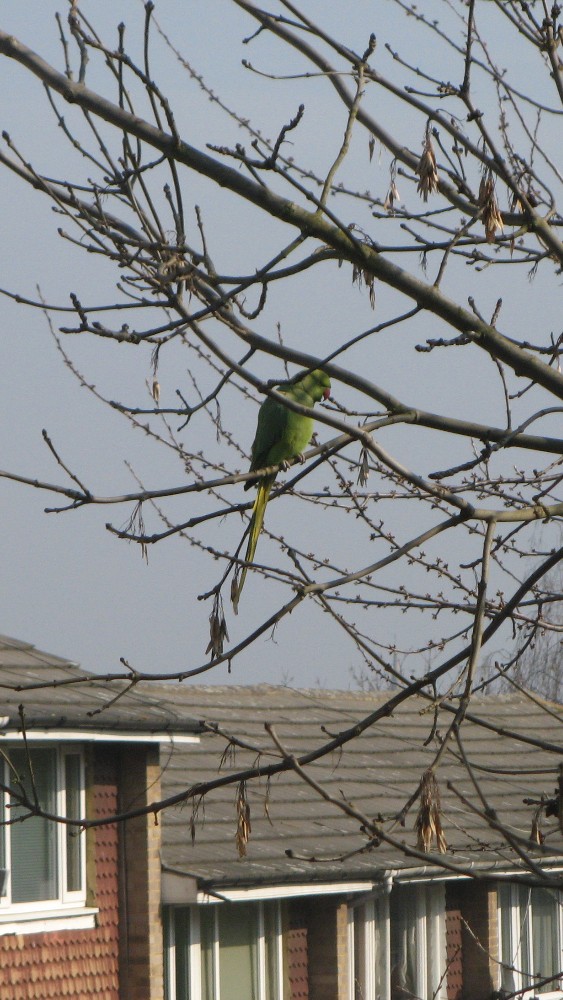
parrot


sunset

view from the lounge window

forsythia


 Crystal Palace Park
Crystal Palace flower bed


London croc


crows

© Liz Price <br>
No reproduction without permission

Sunday, March 22, 2009

Lata Puteh falls, Perak

I went to these falls with my Multiply friend Kwai Loh who is an 'expert' on waterfalls of Malaysia. See my article on Lata Puteh , some Lenggong trip photos and Kwai Loh's photos
Published on The Brunei Times (http://www.bt.com.bn/en)

Looking for Lata Puteh Falls

Natural splendour: Lata Tebing Tinggi. Pictures: Liz Price

Sunday, March 22, 2009

THERE is a beautiful waterfall in Perak in central Malaysia which few people know about. And although it can be seen from the road, few people other than locals use this road. There is a signboard which claims it is the third highest waterfall in Southeast Asia.

We were at Air Terjun Lata Puteh (Lata Puteh Waterfall), which is on the Bintang mountain range between Lenggong and Batu Kurau in ulu Perak. A few hundred metres further up the road are the Lata Tebing Tinggi Falls. These falls are popular with the locals as there is easy access to the base of the falls. However Lata Puteh was a different matter.

There was no obvious path leading up to the falls so we tried to follow the hill up and see how far we could get. This worked initially but then the vague track we were following started leading away from the water. Then it looked even less promising so we decided to backtrack and return to the bottom. We did see several clusters of wild gingers, some of which were flowering, and clusters of figs were adorning the trunks of several trees.

Back at road level the only option was to cross the river and try on the other side. After a short steep section we found ourselves at the base of one of the major falls. The main drop was further over and was actually split into different tiers. We were able to cross this side of the river which brought us to the main volume of the falls. We realised we were now effectively on an island in the middle of the river. Up above us, the water cascaded down and there were some huge house-sized boulders sitting in the river. I was amazed at their sheer size and weight.

We left our rocky island and went back to our original path and continued up. There was no actual path so we just chose the easiest and clearest route, keeping quite close to the river. It was a steep but fairly easy ascent, and it was only at the top that we had to climb between two huge boulders in order to reach the open flat area above. Success. We were at the base of the main fall. It was an amazing site and within seconds we got soaked in spray as the wind and force of the water threw the droplets everywhere. It was like being in a cloud and was actually chilly. We were all quiet initially, just absorbing the splendour of the place. The place was so beautiful with the greenery of the trees and shrubs, and large birds flying around, unused to see human visitors in their habitat.

The Brunei Times

Source URL:
http://www.bt.com.bn/en/en/travel/2009/03/22/looking_for_lata_puteh_falls

Tuesday, March 17, 2009

Burmese fighting balls

Does anyone know what fighting balls are ??? Saw it on a menu in an Indian restaurant in Yangon, Myanmar.

Friday, March 13, 2009

raptor watch

Published on The Brunei Times (http://www.bt.com.bn/en)

Watch out for the raptors!

Raptor watch: (Top) Five peregrine falcons have been seen so far at Tanjung Tuan. (Above) In a single day, more than 2,000 birds from a single species can be seen circling the sky above Tanjung Tuan during this migratory period. So far, Oriental Honey-Buzzards form the largest number at 12,796 recorded by the MNS since February 17 this year. Pictures: Agencies

Friday, March 13, 2009

EVERY March, the skies over peninsular Malaysia are full of migratory raptors taking part on one of the world's greatest journeys. However, as they fly during the day and are very high up in the sky, it can be hard to see them unless you know where to look.

Raptors are birds of prey, and include eagles, buzzards, hawks, kites and falcons. These carnivores hunt using their incredibly good eye sight, very sharp talons and incredible agility in flight. Many originate from the cold northern hemisphere and can be found in the forests of Siberia, northern China, Mongolia, Japan and Korea. To escape the winter, they go to warmer countries. One favourite place is Indonesia but they can go as far as Australia. Coming from northern Asia, the birds take two main routes. One is through China and straight down the Asian mainland to the Thai-Malay peninsular, then over to Sumatra, and stay there, or go further south, maybe Java or even Australia. The other major route is from China, Korea and Japan, to the Philippines and east Borneo and into Indonesia.

The birds often travel in groups. They are large and powerful birds, and can fly long distances. To do so, they cruise at high altitudes and make use of the thermals, or warm air rising to gain height, and then they glide. That way, they don't have to flap their wings and use energy. It also makes them appear graceful to us earthbound humans.

The thermals are generally found over cities and towns, industrial areas, airports and roads. The warm air rising from these places means the birds can rise, and they circle as they gain height. They then glide and lose height until they reach the next thermals. As there are no thermals at night or on wet days, this is when they rest and feed. However, because the area of southeast Asia to Australia consists of thousands of islands, this means there is a lot of water to be crossed. Therefore, the birds flying from Sumatra to peninsular Malaysia choose a narrow route which crosses over Tanjung Tuan in Melaka, just south of the resort area of Port Dickson in Negri Sembilan.

In March, they start the long journey back to their homelands, to spend the summer and to breed. This seasonal departure is eagerly awaited by nature lovers. It is a fabulous site to see these flights. As they approach the Malaysian coast, the birds have lost height, and have to flap their wings in order to reach land, after their exhausting journey over the sea. Because they come in so low, bird watchers have a chance to see them up close.

Birdwatching is one of the most popular hobbies in the world, and there are thousands of birders who enjoy watching their feathered friends. As many birds are migratory, there is a changing population of birds in various places throughout the year. There are many clubs around the world, as well as organisations that help to protect the birds and share information. Even in Southeast Asia, birding is a very big activity. In Malaysia, an annual Raptor Watch is organised annually by the Malaysian Nature Society (MNS).

The MNS monitor these birds passing through and on one weekend hold an event open to the general public, where there are telescopes, information booths and video coverage. This year, the Raptor Watch will be held on March 14-15. The spring raptor migration actually begins in mid February and lasts till mid April; peak period is early March. Of course, nature is unpredictable and although you are not guaranteed of seeing the birds at Tanjung Tuan on a particular day, you stand a very good chance. The main negatives are rain, haze or a change in wind direction. On some days, more than 3000 birds are recorded passing over a period of six to seven hours. That averages one bird every 10 seconds or less! On my last visit, 2700 Crested Honey-Buzzards passed in just one morning. There are five main species that cross over the Straits of Malacca, the most common are buzzards and hawks. Some birds don't make it. Some fall into the sea and drown, others die from starvation or exhaustion and some, unfortunately, are shot.

Whereas dedicated bird watchers normally go out at dawn, the best time to watch these raptors is between 11am and 3pm. Tanjung Tuan, the only remaining patch of coastal forest on the west coast of peninsularr Malaysia, has been listed as an important raptor site by various international bird organisations and also by the National Geographic Society. The area provides food and shelter for exhausted birds and enables them to refuel and rest. Raptors have been using this promontory for thousands of years to cross over the Straits of Malacca. This annual migration is definitely one of nature's spectacular events. You don't have to travel to Africa or some remote wilderness to see this incredible journey.The Brunei Times