Manaus is an Amazon River cruise port and the capital city of Amazonas state. The port is located on Negro River (close to the confluence with Amazon). Manaus marks the boundary between Lower Amazon River downstream to the east and Central Amazon River upstream which extends another 1000 miles to the west.
Though located 1,600 km from the sea, Manaus is accessible by oceangoing ships and one of the chief ports for developing Amazon River Basin.
It has the world’s largest floating docks and these are not affected by 12-18 m differences in water
level. January 2017 the Cunard ship Queen Victoria made its maiden visit in Manaus. It became the
biggest ever cruise ship to navigate in the waters of Amazon River. We later saw the Queen Vic as we were leaving the Amazon and she was entering, at Macapa.

Manaus is at the confluence of two mighty Amazon River tributaries – the Negro and the Solimoes. This 3.5 km bridge is across the Negro, and is the first on the Amazon river system. It was completed in 2010 and opened the area up for development. Crossing is free, compared to the ferry that cost 100 Real (£37). The bridge runs from north to south, to the undeveloped towns of Iranduba etc and towards the untouched jungle.

As we approached Manaus, it looked quite colourful, despite the rain clouds.


There was a band and dancers to welcome us

We had been warned about Manaus being dangerous in terms of crime etc, but I felt perfectly safe and found it had a nice atmosphere. Admittedly there were a lot of police around.
Manaus was established by the Portuguese in 1669. It became one of the wealthiest cities in the world at the height of rubber boom of late 19th and early 20th centuries and was known as Paris of the Jungle. There were grandiose palaces and mansions. British engineers made the water and sewage system. However the rubber boom crashed after 30 years when Henry Wickham smuggled rubber seeds out to Queen Victoria, and they went on to India and the Far East to be cultivated, resulting in the collapse of the Brazilian rubber industry around 1914. The vulcanization of rubber had already been discovered, in Brazil in 1839.
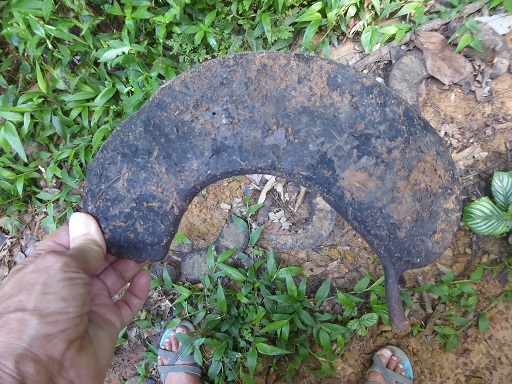
See an article I wrote in 2006 in the Malayan Naturalist on how rubber seeds left Brazil for Malaya. And a similar article in the Brunei Times in 2009 on how rubber seeds reached Malaya.
Manaus lay derelict for half a century. Nowadays it retains a certain style though its former glory lingers just in some of the grand buildings dotted about the town, including a great cathedral on the hill and the Teatro Amazonas opera house.
I was fascinated by all the old buildings. I was surprised how other passengers thought it dirty and run down.

Little Ben and the clock is working.


Note the Sun foundry, Glasgow on this fountain.


Old buildings, modern bikes, pigeons and a jumble of wires. I hardly noticed the wires as this is also a common sight in Thailand -


Amazonas Manaus taxi bikes -

C&A is a Belgian-German-Dutch chain department store that was in England for many years. I saw one branch in Rotterdam but was really surprised to see this one in the middle of the Amazon!


The ornate Teatro Amazonas opera house, completed in 1896 and restored several times.

The monument Abertura dos Portos (Opening of the Ports) stands in the square facing the theatre. It commemorates the liberation of the ports of the Amazon River to foreign trade in 1866. The lady at the top represents the Amazon river. The date on the column is 15 Nov 1889 which is the day the Republic of Brazil was established (Wikipedia) and the emperor was deposed and banished.

The floor has a wave like design, which represents the rivers -


St Sebastian church still had the Christmas crib on 25 January. An attempt on Sebastian's life was made by many archers, but the arrows didn't kill him and he was later beaten to death.


Outside the theatre -

Calliope, the Greek muse who presides over eloquence and epic poetry -

The buildings in the square facing the theatre had all been done up -


Moving away from the theatre -

Old hospital -

Vulture on the hospital building

Eduardo Ribeiro was Governor of Amazonas 1890 to 1896, and was the first black African to govern Amazonas. In his government he was responsible for speeding up and completing the construction of the Amazonas Theater and many of the other projects in the city of Manaus, giving it the nickname of "Paris of the Tropics" .


Waiting for a bus


Old college -

Colourful scenes


This reminded me of shops in SE Asia that sell statues for Chinese altars and shrines etc


Adolpho Lisboa municipal market. It was built in 1880 in Art Nouveau style, and is one of the most
important examples in the world of iron architecture. See Wikipedia article.

This fine old building is by the cruise terminal, I think it is the old Court of Auditors. It stands on a large area of empty land.


Pineapples, oranges and potatoes being loaded onto our ship.


I'd really enjoyed my time wandering around Manaus. The next day I did a boat trip to the famous "Meeting of the Waters".
--
See the next blog on my Amazon cruise - Meeting of the Waters