Enjoy!!!

Enjoy!!!

Saturday, February 6, 2016

Scenery in southern Sal, Cape Verde

Sal scenery. There are beaches in the south of the island and there are many kite boarders as well as surfers. The beach at Santa Maria -


This is Ponta Preta beach on the southwest tip of the island. The sea was far too cold for me, I just paddled a couple of times. In fact no one was swimming, although some of the surfers were tough enough not to wear wet suits.


There is a large sand dune


The flat sandy terrain that forms most of the island -


Further up the west coast is the Bay of Murdeira with Mount Leao across the water, this is one of Sal's higher hills, at 165 m.
There are some interesting sand erosional features -


The next town to the north is Espargos, which is the capital of the island. It is a very quiet town, Santa Marie is more busy! A colourful bank -
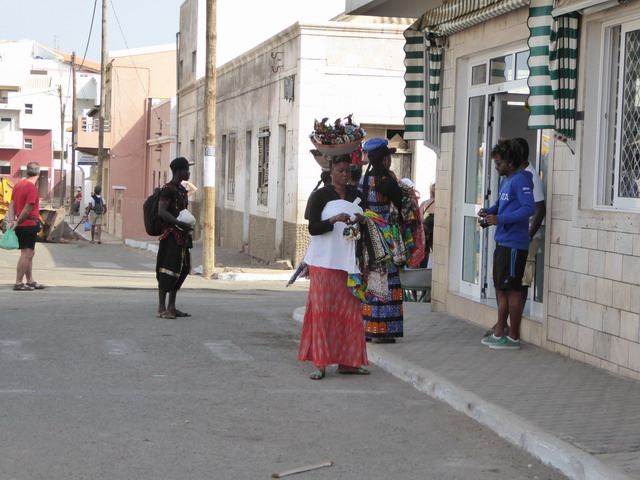
 West Africans trying to sell goods to tourists -
 The market. All the fruit and veg are imported from other Cape Verde islands and possibly further afield as well -


There is a large shanty area outside Espargos

**
See my other blogs on Sal :

Salt from Sal

Vila Verde and Santa Maria pier

Santa Maria

Scenery in northern Sal

Flora & fauna of Sal

Sal procession to remember slavery, Cape Verde

**

© Liz Price
No reproduction without permission

Friday, February 5, 2016

Santa Maria, Sal, Cape Verde

The small town of Santa Maria is located on the south tip of Sal.
The streets and most of the pavements are cobbled. Makes it difficult for pushchairs and wheelchairs. Some buildings are colourful.


 A reggae bar
The post office faces a large square of empty land -


Buy your wind here!

99% of the people are Christians. Many men have rasta hair but it's probably more of a fashion than a religion.

The small grocery shops are run by Chinese who arrived on the island about 10 years ago


There are very few vegetables available on Sal, they are imported from other islands and mostly sold on the streets

Most Cape Verdeans are mulattos of mixed African and European origins, alternatively known as creole, of mixed black and white descent. European ancestors include Spanish and Italian seamen, followed by Portuguese settlers. Cape Verde's population today is mostly creole. Situated at the hub between Europe, America and the Indian Ocean, Cape Verde developed a completely new Creole culture and language, evolving from the blending of very diverse ethnic groups. The Creole people assumed a forerunner role in the independence movement of Africa in its seemingly never-ending battle against colonization.


The street sellers come from mainland Africa, they are not Cape Verdeans.


***
See my other blogs on Sal :

Sal salt

Sal Vila Verde & Santa Maria pier and fish

Scenery in southern Sal

Scenery in northern Sal

Flora & fauna of Sal

Sal procession to remember slavery, Cape Verde

****
© Liz Price
No reproduction without permission

Sal Vila Verde & Santa Maria pier, Cape Verde

Sal is one of nine inhabited islands in the Cape Verde archipelago. Cape Verde lies about 350 km off the coast of West Africa, off Senegal and The Gambia. Along with Boa Vista, Sal attracts the most tourists. It is a small island, only 30 x 12 km. It is very flat and desert like. It is one of the windward islands of Cape Verde with the wind coming from Africa. The main tourist activities are wind based, as the wind blows all year round.

I stayed just outside the small town of Santa Maria. View from my balcony, a desert landscape with Santa Maria to the right in the distance. You can see the palms are all blowing in the wind. A 'dusty' sunrise, chilly at first but it got up to 27 C during the day -


I stayed at Vila Verde -
It is an absolutely huge complex although only one block is the hotel, the many other blocks are apartments, mostly deserted due to the economic problems in Europe. It is a bit of a ghost town and is certainly quiet


The Cactus block, which is the hotel

This was part of my breakfast, missing from the photo is a bowl of fruit and a basket of toast!

Breakfast kept me going all day and in the evening I had a fish dinner. Everyday the fishermen bring their catch to the pier in Santa Maria where it is immediately distributed. Much of it has already been pre-ordered by restaurants. The fish include tuna, wahoo and garoupa. Weighing the catch -


 The red ones are red garoupa, I had a large one for dinner and it cost 8.50 €.
  The long ones are wahoo -
The sea is nice and blue and there are no oil smears around the pier and no rubbish. In fact there is no rubbish anywhere.


 The people all have hand held scales -


The ladies from the pier now sell their fish on the streets, the lady in blue (below) appears in one of the photos above on the pier.

**
See my other Cape Verde blogs :

Salt from Sal

Santa Maria town & people

Scenery in southern Sal

Scenery in northern Sal

Flora & fauna of Sal

Sal procession to remember slavery, Cape Verde

**

© Liz Price
No reproduction without permission